LED Light Bars: Behind-Grille Install VS In-Grille Install
It's a fair question! For many vehicle owners, mounting lights behind the factory grille feels like the safer option because it avoids modifying the original grille. Others prefer an integrated Grille Kit / in-grille installation for its cleaner, OE-style appearance. In reality, both approaches have their place, and the right choice often comes down to personal preference, how the vehicle is used, and the look you're trying to achieve.
One thing that has always been debated, though, is whether the position of the lamps has any real effect on lighting performance. Rather than relying on assumptions or the inevitable discussions in Facebook comment sections, we decided to put it to the test!

The Test:
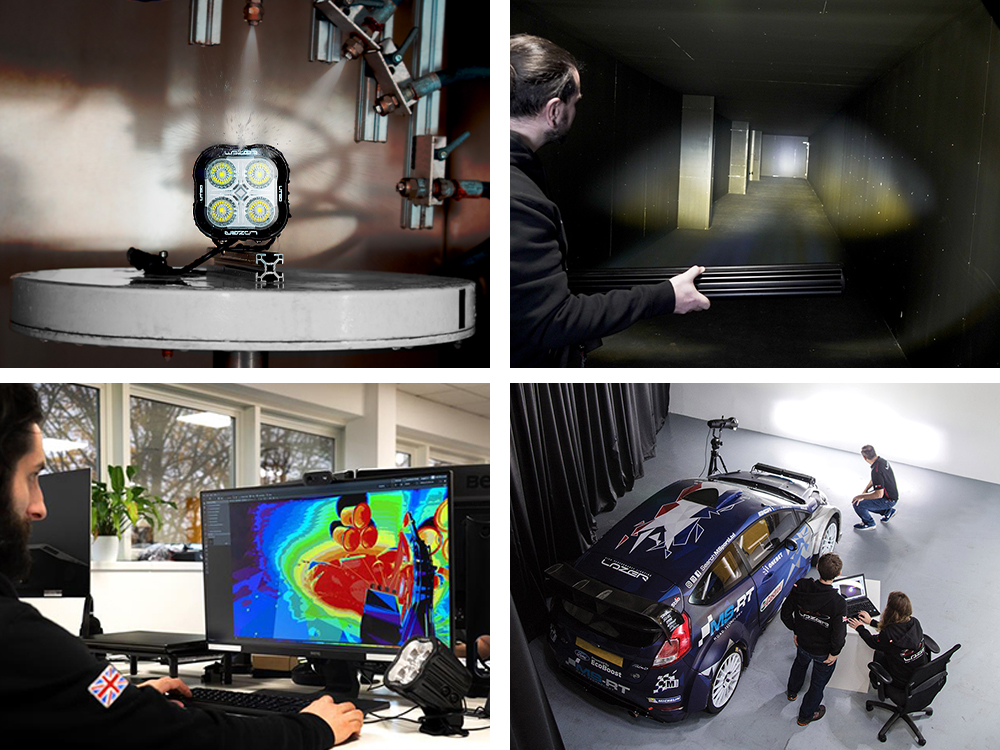
At Lazer, product testing is a huge part of our development process. At our UK headquarters and manufacturing facility we have dedicated testing equipment covering everything from environmental durability to photometric performance. This includes climate, salt spray and UV chambers, along with two dedicated light tunnels used to accurately measure beam pattern, light output and intensity. Esentially, we know what were doing when it comes to testing....
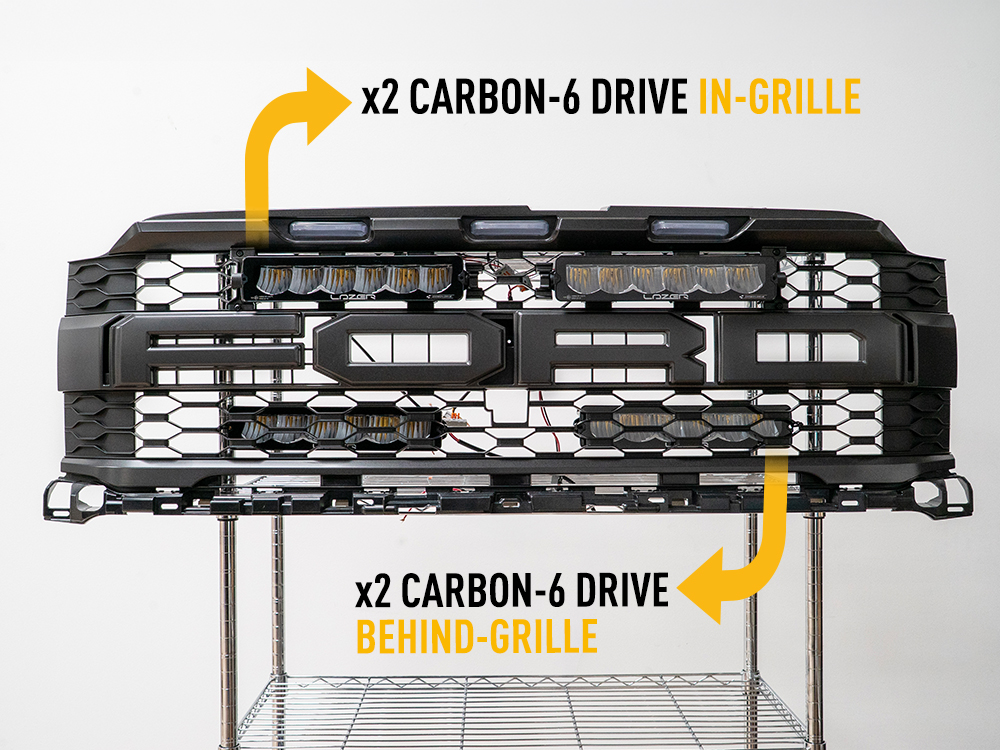
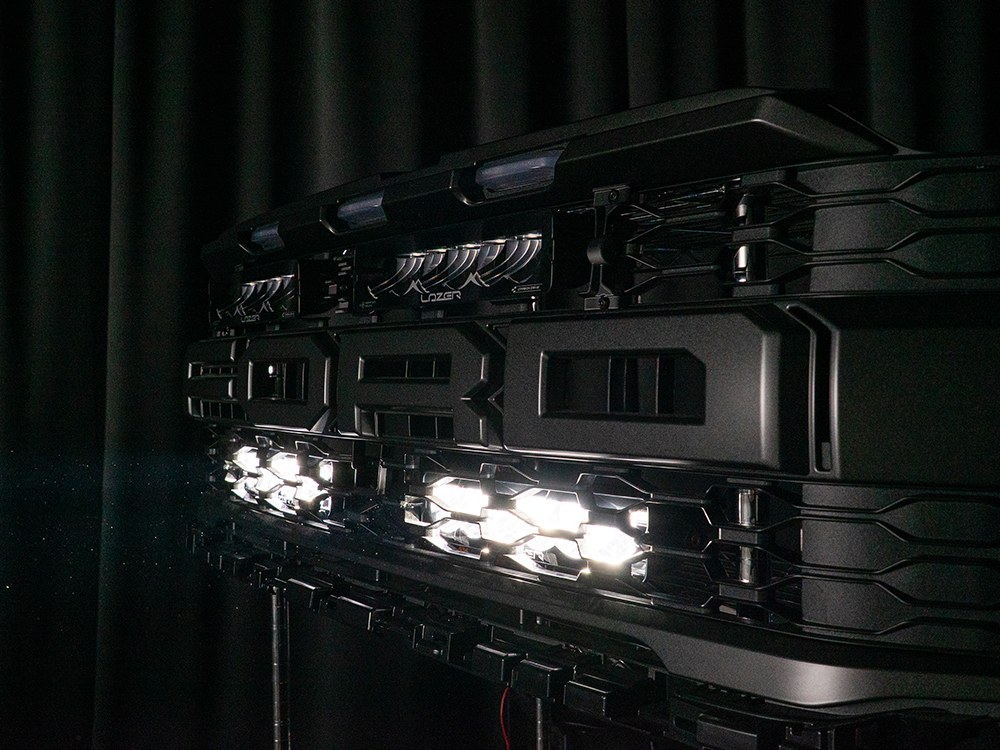
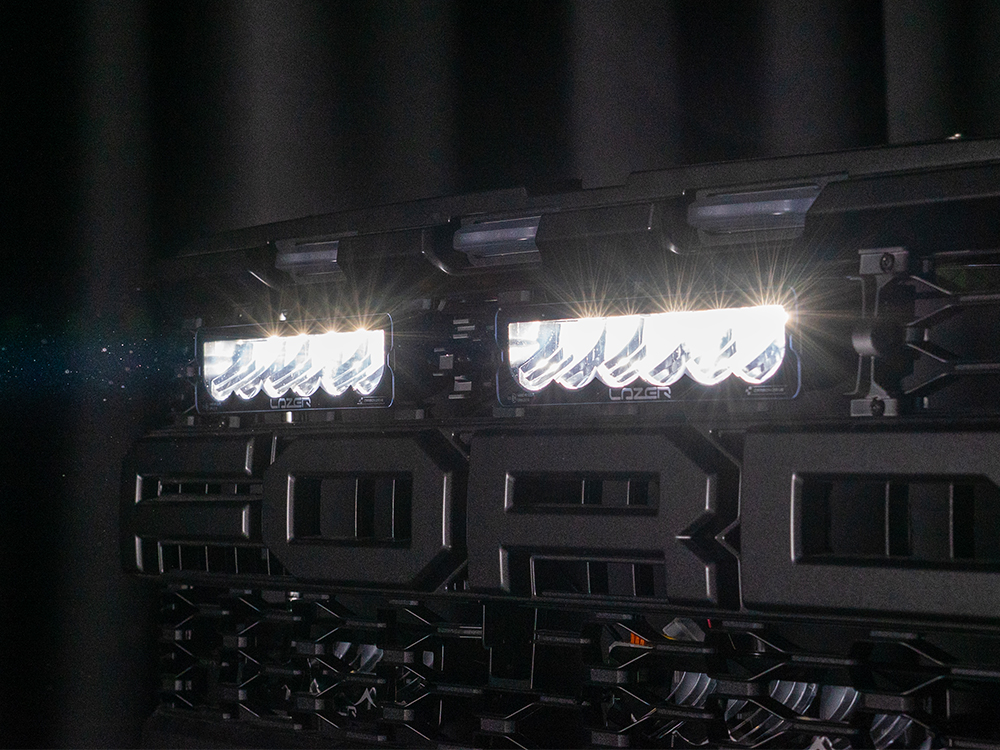
For this comparison we used a Ford F-150 Raptor grille fitted with four Carbon-6 Drive LED light bars. Two lamps were installed using our Grille Integration Kit, positioning them within the grille apertures, while an identical pair were mounted behind the grille. Testing both configurations on the same grille assembly, under identical conditions, allowed us to then isolate one variable: the mounting position of the lamps.
How We Measured Performance:
To compare both installations, we measured two key metrics:
1. Effective Lumen Output
Effective lumen output measures the total amount of usable light reaching the target surface. Although the lamps themselves produce the same raw lumens, we want to see if the mounting position can influence how much of that light actually reaches the road.
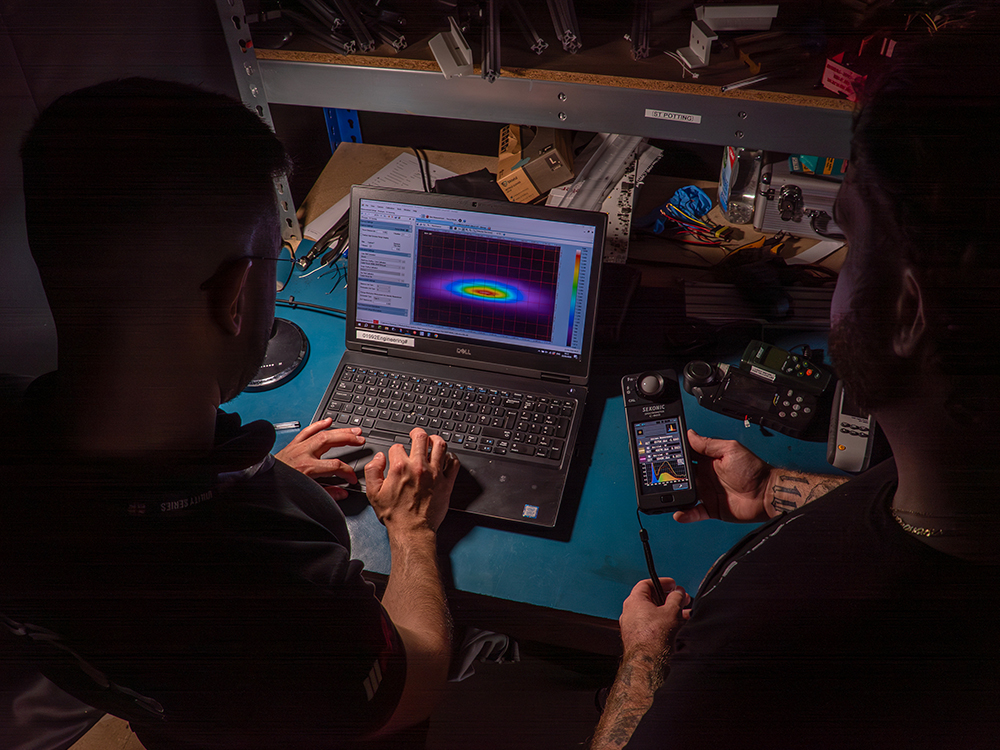
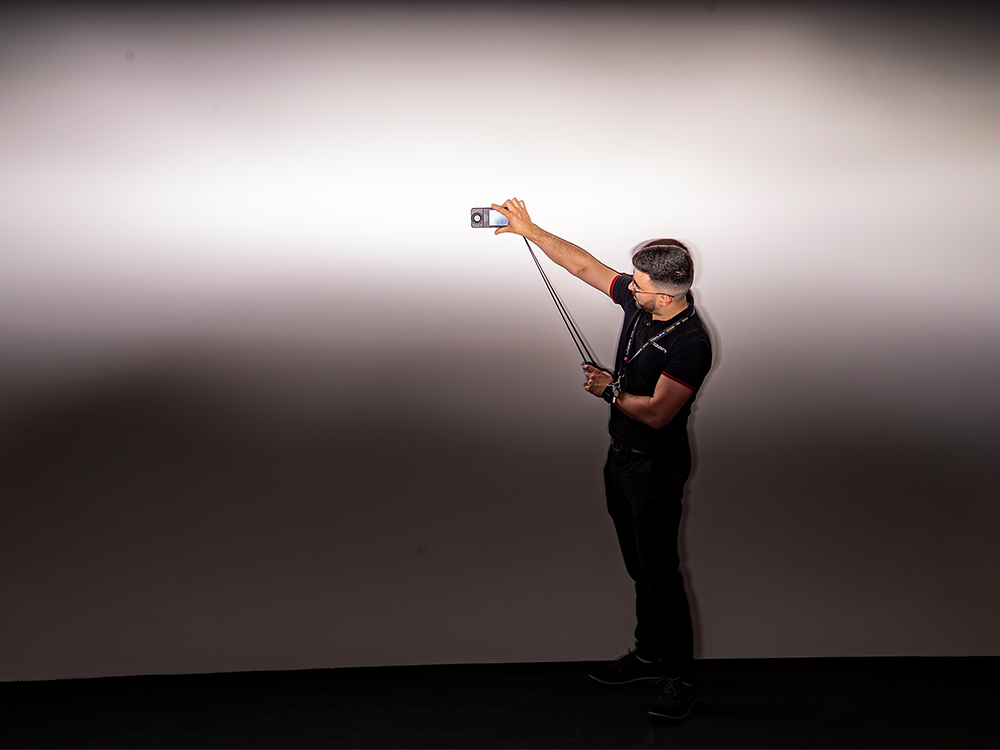
If part of the beam is blocked or scattered by the vehicle's grille, less usable light reaches the intended area. We took beam pattern images and data then analysed them using photometric software, allowing us to calculate the total luminous flux projected onto the test wall by each configuration.
2. Peak Intensity
We then also measured the Peak intensity, which show us the brightness of the beam at its most concentrated point, giving an indication of long-range performance. The measurements were taken using a calibrated lux meter before being converted into candela using the inverse square law.
The Results:
So what did we find out...

The first measurement (Effective lumen output) looked at the amount of usable light reaching the target surface. When the lamps were moved from the Grille Integration Kit position to behind the grille, usable light output was reduced by 31%. This demonstrates how the vehicle's grille can obstruct or scatter some of the available light before it reaches the road ahead. By positioning the lamps within the grille openings, this obstruction is avoided, allowing more of the available light to travel directly and unobstructed.
The impact was even more noticeable when measuring peak intensity. Moving the same lamps behind the grille resulted in a 37% reduction in peak intensity. This suggests the grille doesn't just reduce the overall amount of light passing through it, but can also disrupt the beam's hotspot, reducing its maximum brightness and ultimately its long-range performance.
Our Conclusions:
The testing shows that mounting position can make a measurable difference to lighting performance. Compared with the Grille Integration Kit, mounting the same lamps behind the grille resulted in:
-
31% reduction in usable light
-
37% reduction in peak beam intensity
In simple terms, mounting the lamps behind the grille means less light reaches the target area, and the light that does make it through has reduced intensity.
In-Grille / Lazer Grille Kit 1 - 0 Behind-Grille.

However, that being said, its important for customers to consider that lighting performance is only one part of the decision, the optimal solution will vary vehicle to vehicle and every installation method has its own strengths depending on how the vehicle is used and the style / aesthetics you like. Ultimately, there isn't a single "right" way to mount auxiliary lighting. The best solution depends on your own needs and priorities. If we were to summarise each installation method, we'd put it like this:
- Grille Integration Kit: If you value ensuring the best lighting performance possible, and a sleek flush mounted OE-style appearance, this is a great option. Thanks to the quick and easy installation, fitting time and costs typically are low, with clarity on exactly what you're getting at the end of it. Cutting the original grille on the vehicle isn't for everyone though, but (if and when needed) picking up a replacement grille through an online marketplace can be cheap and easy.
- Behind Grille: A good option for those wanting to retain an unmodified factory grille with a hidden installation, with these aspects a priority over full light output performance. The lights benefit from being out of sight, so from a theft-prevention perspective, this is a good option. Typically completed with folded metal brackets, for serious, prolonged, fast and rough off-road use there's less risk of lights coming 'loose', but the time for fitting (with grille/bumper removal) is typically higher and more expensive.

Each approach has its place. However, what this simple testing has shown, is that mounting the lamps behind the vehicle grille can have a significant impact on how much light is effectively delivered on the road ahead. While that won't necessarily outweigh every other consideration, hopefully this test helps provide some objective data to inform and help drivers make a decision.
For those considering one of our Grille Integration Kits, this should be reassuring to know that yes you do have to modify the grille and make the cut, but alongside the sleek integrated appearance, you are getting the maximum level of performance and the full output that the lights were designed to deliver.
To stay updated with exciting news and new product launches, follow Lazer's journey through our social media channels:
Instagram - https://www.instagram.com/lazerlamps/
Facebook - https://www.facebook.com/Lazerlamps/
TikTok - https://www.tiktok.com/@lazerlamps
YouTube - https://www.youtube.com/@Lazerlamps